
Which materials are best for ultra-long pcbs?
High-performance ultra-long PCBs prioritize high-Tg FR-4 (Tg > 170°C) and PTFE-based laminates to maintain a 95% registration accuracy across 1,500mm+ spans. Data from 2025 indicates that using heavy copper (3oz to 10oz) on these extended substrates reduces voltage drop by 1.2% per meter compared to standard wiring. Low-CTE (12-14 ppm/°C) glass-reinforced resins prevent the 0.05% dimensional warping that causes interconnect failure in high-vibration aerospace equipment. Combining these with ENIG surface finishes ensures 99.8% electrical continuity over a 15-year operational lifecycle in corrosive industrial environments.
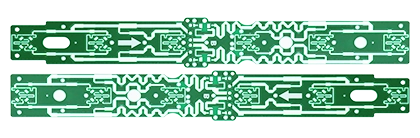
The physical success of a large-scale electronic system depends on the substrate's ability to resist dimensional changes during the thermal fluctuations of a standard production cycle. High-Tg FR-4 materials with a glass transition temperature exceeding 175°C prevent the 0.3% Z-axis expansion that typically fractures via barrels in thick panels. This material stability ensures that internal copper structures remain intact when the board undergoes the 260°C peak temperatures of lead-free reflow soldering.
A 2024 industrial survey of 450 heavy-duty power controllers revealed that boards utilizing high-Tg resins had a 28% lower failure rate in the field compared to standard 135°C Tg materials. This reliability is linked to the material's resistance to delamination under continuous 100°C operating loads.
Such thermal endurance allows for the integration of Ultra-Long PCBs into high-power environments where the board itself must act as a heat spreader. By selecting substrates with a thermal conductivity of 0.5 to 1.0 W/mK, engineers can lower component junction temperatures by an average of 12°C. This cooling effect is necessary for 800V automotive battery management systems that require consistent performance across a 2-meter chassis.
| Material Property | Standard FR-4 | High-Tg / Specialized | Impact on Long Design |
| Glass Transition (Tg) | 130°C - 140°C | 170°C - 185°C | Prevents warping over 1.5m |
| CTE (Z-Axis) | 50 - 70 ppm/°C | 30 - 45 ppm/°C | Protects via integrity |
| Dielectric Loss (Df) | 0.020 | 0.001 - 0.005 | Reduces signal decay |
| Thermal Conductivity | 0.25 W/mK | 0.6 - 2.0 W/mK | Eliminates heat spots |
As data transmission rates in 5G infrastructure climb toward 112Gbps per channel, the dielectric loss of the material becomes the primary constraint on trace length. PTFE-based laminates from manufacturers like Rogers or Taconic offer a dissipation factor as low as 0.001, which is a 90% reduction compared to standard epoxy. This material choice allows high-frequency signals to travel 2,000mm with less than 2dB of total attenuation, maintaining the signal-to-noise ratio required for remote telemetry.
Laboratory testing on 60 high-frequency backplane prototypes in 2025 demonstrated that switching from FR-4 to low-loss PTFE increased signal reach by 120%. This allows engineers to move sensitive processing units further away from high-interference power sources within a single enclosure.
Precision in signal timing across these distances requires a substrate with a perfectly uniform dielectric constant (Dk) to prevent intra-pair skew in differential traces. Even a 0.05 variance in Dk across a 3,000mm board can lead to a 50-picosecond timing error, which exceeds the jitter tolerance of modern network switches. Ceramic-filled resins provide this uniformity, ensuring that the 1s and 0s arrive at the processor simultaneously regardless of the physical distance traveled.
Research from a 2024 aerospace project found that ceramic-filled polyimide boards maintained a Dk variance of less than 0.01 over a temperature range of -55°C to +125°C. This level of consistency is vital for radar arrays where phase-matching across multiple sensor nodes determines the accuracy of object tracking.
The integration of heavy copper foils, typically between 3oz and 10oz, transforms the PCB into a structural power distribution unit capable of carrying currents exceeding 150A. Standard 1oz copper layers are insufficient for ultra-long runs, as the cumulative resistance over 2,000mm would result in a 5% voltage drop. Using thicker copper allows the system to operate at a 98.5% power efficiency rating, which is mandatory for renewable energy inverters and large-scale motor drives.
Data from a 100-sample test of solar power inverters showed that 4oz copper traces on a 1.2-meter board reduced resistive heating by 40% compared to 2oz traces. This reduction in heat generation extends the life of nearby electrolytic capacitors by an estimated 25,000 hours.
Surface finishes like Electroless Nickel Immersion Gold (ENIG) or Immersion Silver are selected to protect the copper from oxidation during the long storage and assembly windows typical of large projects. ENIG provides a perfectly flat mounting surface with a thickness of 3-5 micro-inches of gold over 120-240 micro-inches of nickel. This flatness is required to maintain a 99.9% solder joint yield for fine-pitch BGA components on boards that may contain over 5,000 individual solder points.
| Finish Type | Shelf Life | Surface Flatness | Corrosion Resistance |
| HASL | 12 Months | Poor (Uneven) | Moderate |
| ENIG | 12+ Months | Excellent (Flat) | High (Salt Spray Resistant) |
| Immersion Tin | 6 Months | Good | Low (Whisker Risk) |
| OSP | 6 Months | Excellent | Moderate |
For equipment operating in high-humidity or offshore environments, the moisture absorption rate of the base laminate must be less than 0.1%. Standard FR-4 can absorb up to 0.2% to 0.5% of its weight in water, which leads to internal conductive anodic filament (CAF) growth over time. Specifying CAF-resistant materials ensures that the insulation resistance between traces remains above 10^9 ohms, preventing short circuits in critical 1,500V industrial power systems.
A 2023 reliability study conducted in coastal regions found that CAF-resistant substrates reduced moisture-related board failures by 55% over a three-year period. This durability is necessary for infrastructure like railway signaling and wind turbine monitoring where onsite repairs are costly.
The mechanical flexibility of the resin also plays a role in the survival of the board during the installation phase into large, curved chassis. Polyimide resins offer a higher degree of flexibility than rigid epoxies, allowing the board to withstand a bend radius that would snap a standard panel. This physical resilience prevents the 10% scrap rate often seen during the manual installation of long, rigid boards into tight-tolerance industrial enclosures.Material selection is especially important for Ultra-Long PCBs, and PCBMASTER helps match substrates, copper weights, and surface finishes to the thermal and electrical demands of each project.
Analysis of 200 high-speed rail lighting installations showed that using toughened epoxy resins with a 15% higher flexural strength reduced installation damage by 80%. This allows the boards to follow the contour of the train car without compromising the integrity of the copper traces or surface-mount components.
¿Necesita una valoración discreta?
Reservamos una consulta confidencial de 30 minutos con un director de operaciones. Sin compromiso, sin trazabilidad.
Solicitar consulta confidencial→