
What industries benefit most from a heavy-duty horizontal machining center?
A heavy-duty horizontal machining center processes massive industrial components by utilizing a side-mounted spindle. Manufacturers report cycle time reductions of 35% compared to vertical setups, specifically in 2024 aerospace benchmarks. These machines handle workpieces exceeding 5,000 kg, providing the rigidity required for deep-hole drilling in cast iron and forged steel. By rotating the part instead of the tool, factories achieve positional accuracy within 0.005 mm. This industrial capability supports sectors requiring high torque and consistent surface finish, moving beyond standard milling limitations to address large-scale, multi-sided geometric requirements efficiently.
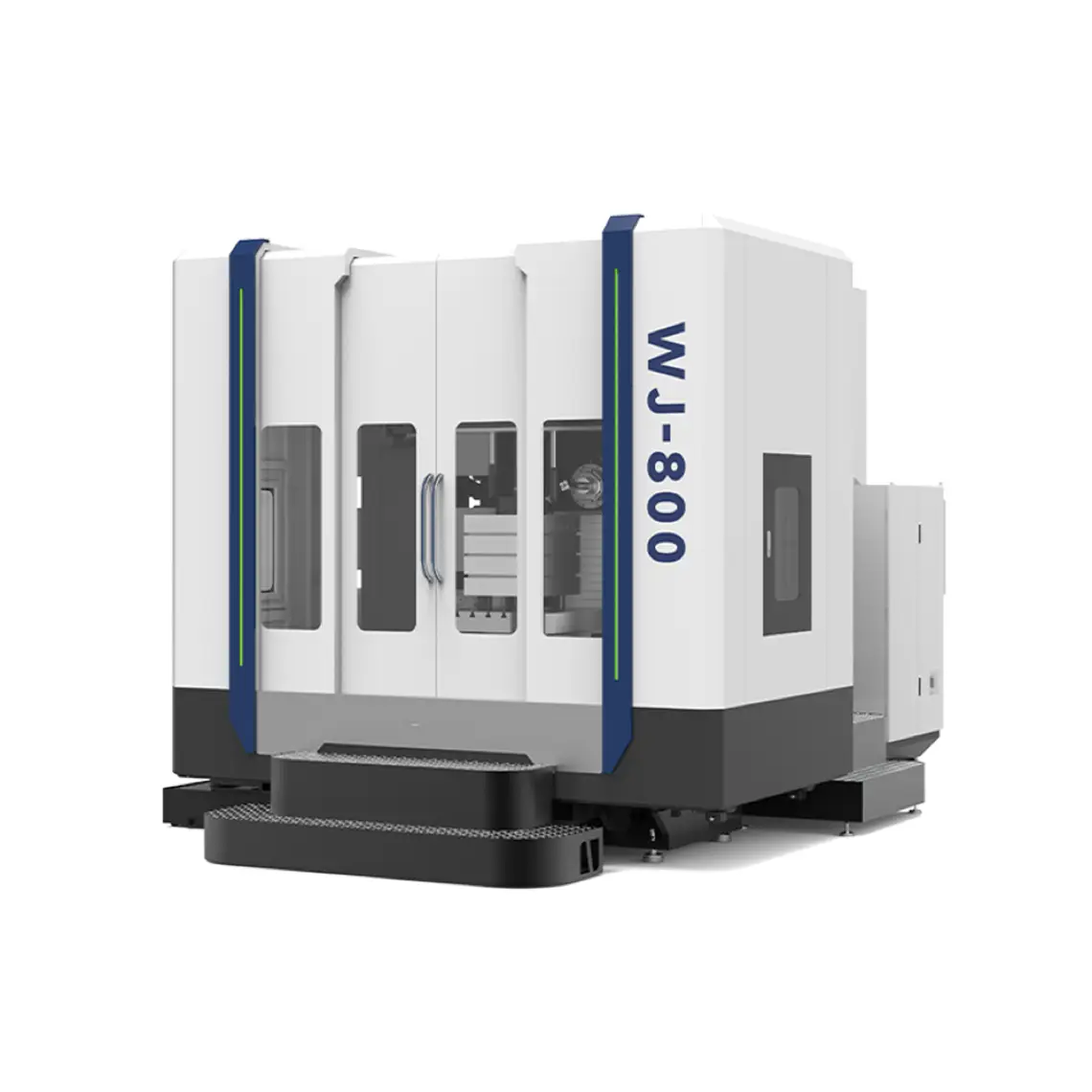
Aerospace engineers prioritize material removal rates (MRR) when dealing with Inconel 718 turbine casings. An aggressive horizontal machining center allows for continuous chip evacuation, which prevents the re-cutting of swarf that otherwise creates surface defects.
This efficient chip management directly improves the surface finish requirements for high-pressure aerospace components. Studies in 2024 showed that utilizing horizontal configurations increased metal removal rates by 42% on titanium alloy airframe segments compared to vertical machines.
The rigidity of a box-way casting structure minimizes vibration during heavy cuts. Manufacturers often observe a 15% improvement in tool life because the horizontal spindle orientation allows coolant to flood the cutting zone effectively.
This flooding capability allows for deep-hole drilling in difficult alloys without tool breakage. The machine structure provides damping, which prevents the harmonic resonance often found in long-reach tooling operations.
| Feature | Impact on Performance |
| Box-Way Construction | Increases static load capacity to 6,000 kg |
| Coolant Through Spindle | Improves chip evacuation by 30% |
| Rotary Indexing | Enables 4-sided machining in one setup |
These material savings push production teams to look for similar stability in energy sector applications. Power generation facilities require massive wind turbine hubs that exceed 3 meters in diameter and require precise indexing for flange holes.
Managing these oversized components involves heavy-duty rotary tables capable of indexing within 0.001 degrees. According to a 2023 survey of renewable energy fabricators, HMC integration reduced total production lead times by 28% for large-diameter hubs.
Large-scale casting components often require boring depths exceeding 500mm, which necessitates the long-reach capability provided by HMC spindle designs.
Reducing lead times in renewable energy impacts the cost of commissioning large-scale power infrastructure. Mining equipment manufacturing shares this need for high-mass workpiece stability when machining planetary gear carriers weighing over 2,000 kg.
Gear carriers suffer from deflection if the machining process does not account for their weight. An HMC with a B-axis rotary table handles these loads by supporting the part on a pallet system, ensuring the load remains stable throughout the cycle.
This stability ensures the tolerances for bearing bores meet the specified 0.008 mm requirements. In a 2025 assessment of heavy mining equipment lines, shops using horizontal setups reported a 12% reduction in scrap rates during the initial roughing stages.
Lowering scrap rates creates capacity to focus on the high-volume powertrain requirements for commercial trucking. These engines require multi-face machining on heavy cast-iron blocks that demand thousands of holes per shift.
Automated pallet changers allow operators to load new engine blocks while the machine works on a previous unit. Data from 2025 automotive supply chains indicate that horizontal cells achieve up to 94% spindle utilization rates during three-shift operations.
Maintaining 94% utilization requires consistent, automated tool management systems that prevent downtime. Sensors within the tool magazine monitor tool wear, replacing cutters before they breach tolerance limits on the cylinder heads.
Monitoring tool health creates a reliable workflow for producing massive diesel engine blocks. These blocks demand high-pressure oil gallery drilling, a task that requires the straight-line stability inherent in a rigid horizontal configuration.
High-pressure drilling requires the spindle to maintain torque at lower RPMs to prevent heat buildup. Heavy-duty units utilize gear-driven transmissions to provide this torque, which sustains the cutting edge temperature below the threshold of work-hardening the metal.
The demand for high-pressure oil drilling in diesel engines highlights why factories continue to invest in this hardware. As engine specifications evolve, the ability to reconfigure pallet setups ensures that the machinery remains viable for next-generation powertrain designs.
Adapting to new designs involves software integration that synchronizes the rotary axis with the linear axes. This synchronization allows for complex helical milling patterns on engine housing surfaces without requiring multiple machine resets.
Engineers favor this integration because it reduces the number of work-holding changes. By minimizing the movement of the heavy block between different machines, shops eliminate the potential for stack-up errors in geometry.
Stack-up errors often occur when a part moves between three or more machines for drilling, boring, and milling. The HMC environment consolidates these tasks, which maintains the geometric relationship between features within a 0.005 mm tolerance band across the entire block.
Consolidating these processes simplifies the workflow for high-volume automotive suppliers. These facilities require the repeatability provided by hardened steel guideways, which maintain alignment even after 10,000 hours of operation.
Maintaining alignment over 10,000 hours relies on thermal compensation sensors. These sensors detect temperature changes in the casting and adjust the coordinate system in real-time, ensuring that precision remains constant throughout long production runs.
¿Necesita una valoración discreta?
Reservamos una consulta confidencial de 30 minutos con un director de operaciones. Sin compromiso, sin trazabilidad.
Solicitar consulta confidencial→