
Is White Fused Alumina Grit the Best Choice for Blasting?
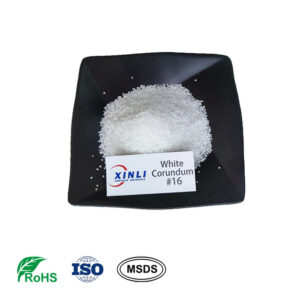
In the vast arena of sandblasting, choosing the right abrasive is akin to selecting the most precise scalpel for surgery. Claiming a single material as "best" is arbitrary, but white fused alumina grit, with its unique performance matrix, stands out as an unparalleled champion in numerous key applications. Its core competitiveness lies first and foremost in its unmatched balance of hardness and toughness, achieving a Mohs hardness of 9.0 and a fracture strength approximately 15% higher than ordinary brown fused alumina. This means that at a sandblasting pressure of 0.7 MPa, the consumption rate of white fused alumina grit can be 20-30% lower than that of brown fused alumina. For example, in large shipyards performing Sa2.5 level cleaning of ship hull steel plates, using white fused alumina abrasive can increase the effective sandblasting area per cycle by 25% while reducing dust generation by 40%, significantly improving the working environment and reducing post-processing costs.
From an economic lifecycle analysis perspective, white fused alumina grit demonstrates exceptional value sustainability. Its high purity (Al₂O₃ content ≥99.2%) and low iron impurity characteristics allow it to be reused an average of 8-12 cycles, while some low-grade abrasives may only last 3-5 cycles. Taking a steel structure corrosion protection company with an annual processing capacity of 100,000 tons as an example, although the initial purchase cost of using white fused alumina is about 35% higher than that of ordinary abrasives, its ultra-long service life and stable cleaning efficiency can actually reduce the overall annual abrasive procurement budget by 18%, with the return on investment typically completed within 14 months. More importantly, its extremely low free silicon content (usually below 0.1%) minimizes the occupational health risk of silicosis, meeting the increasingly stringent requirements of global occupational safety and health management systems (such as OSHA standards).
 However, the "best" choice must be considered in the specific application scenario. When processing aerospace components such as titanium alloys or aluminum alloys, which have zero tolerance for iron contamination, white fused alumina grit is almost the only option because it can control the surface contamination rate to aerospace-grade standards of less than 5 particles per square centimeter. In contrast, although silicon carbide is harder, its brittleness leads to a pulverization rate more than twice that of white fused alumina, increasing material costs and affecting surface texture uniformity. However, in mold cleaning applications requiring extremely fine surface roughness, such as plastic injection molds, dry blasting with white fused alumina of a specific particle size (e.g., 80 mesh) can precisely control the surface roughness Rz within the range of 3-5 micrometers, with a standard deviation of less than 0.5 micrometers—a precision unattainable by many soft abrasives (such as walnut shell powder).
Market data and technological innovation trends provide a broader perspective. According to global abrasive market analysis, in the high-end surface treatment and cleaning sector, white fused alumina's market share has maintained a stable annual growth rate of 5%, particularly in emerging markets such as wind turbine blade pre-coating treatment and semiconductor equipment component cleaning, where its application growth rate exceeds 10%. A comparative study conducted by a third-party laboratory showed that, under the same blasting parameters, welded parts treated with white fused aluminum grit had a 98% probability of achieving the highest level (0, no peeling) in subsequent coating adhesion tests (cross-cut test), 50 percentage points higher than those treated with silica sand. This profoundly reveals that choosing a blasting abrasive is not simply a matter of cost calculation, but a comprehensive strategic decision concerning final product quality, production safety, total operating costs, and compliance risks. In the race to achieve high-quality surface integrity, high cleanliness, and predictable results, white fused aluminum grit truly sets a gold standard for balancing performance and efficiency.
However, the "best" choice must be considered in the specific application scenario. When processing aerospace components such as titanium alloys or aluminum alloys, which have zero tolerance for iron contamination, white fused alumina grit is almost the only option because it can control the surface contamination rate to aerospace-grade standards of less than 5 particles per square centimeter. In contrast, although silicon carbide is harder, its brittleness leads to a pulverization rate more than twice that of white fused alumina, increasing material costs and affecting surface texture uniformity. However, in mold cleaning applications requiring extremely fine surface roughness, such as plastic injection molds, dry blasting with white fused alumina of a specific particle size (e.g., 80 mesh) can precisely control the surface roughness Rz within the range of 3-5 micrometers, with a standard deviation of less than 0.5 micrometers—a precision unattainable by many soft abrasives (such as walnut shell powder).
Market data and technological innovation trends provide a broader perspective. According to global abrasive market analysis, in the high-end surface treatment and cleaning sector, white fused alumina's market share has maintained a stable annual growth rate of 5%, particularly in emerging markets such as wind turbine blade pre-coating treatment and semiconductor equipment component cleaning, where its application growth rate exceeds 10%. A comparative study conducted by a third-party laboratory showed that, under the same blasting parameters, welded parts treated with white fused aluminum grit had a 98% probability of achieving the highest level (0, no peeling) in subsequent coating adhesion tests (cross-cut test), 50 percentage points higher than those treated with silica sand. This profoundly reveals that choosing a blasting abrasive is not simply a matter of cost calculation, but a comprehensive strategic decision concerning final product quality, production safety, total operating costs, and compliance risks. In the race to achieve high-quality surface integrity, high cleanliness, and predictable results, white fused aluminum grit truly sets a gold standard for balancing performance and efficiency.
However, the "best" choice must be considered in the specific application scenario. When processing aerospace components such as titanium alloys or aluminum alloys, which have zero tolerance for iron contamination, white fused alumina grit is almost the only option because it can control the surface contamination rate to aerospace-grade standards of less than 5 particles per square centimeter. In contrast, although silicon carbide is harder, its brittleness leads to a pulverization rate more than twice that of white fused alumina, increasing material costs and affecting surface texture uniformity. However, in mold cleaning applications requiring extremely fine surface roughness, such as plastic injection molds, dry blasting with white fused alumina of a specific particle size (e.g., 80 mesh) can precisely control the surface roughness Rz within the range of 3-5 micrometers, with a standard deviation of less than 0.5 micrometers—a precision unattainable by many soft abrasives (such as walnut shell powder).
Market data and technological innovation trends provide a broader perspective. According to global abrasive market analysis, in the high-end surface treatment and cleaning sector, white fused alumina's market share has maintained a stable annual growth rate of 5%, particularly in emerging markets such as wind turbine blade pre-coating treatment and semiconductor equipment component cleaning, where its application growth rate exceeds 10%. A comparative study conducted by a third-party laboratory showed that, under the same blasting parameters, welded parts treated with white fused aluminum grit had a 98% probability of achieving the highest level (0, no peeling) in subsequent coating adhesion tests (cross-cut test), 50 percentage points higher than those treated with silica sand. This profoundly reveals that choosing a blasting abrasive is not simply a matter of cost calculation, but a comprehensive strategic decision concerning final product quality, production safety, total operating costs, and compliance risks. In the race to achieve high-quality surface integrity, high cleanliness, and predictable results, white fused aluminum grit truly sets a gold standard for balancing performance and efficiency.
Línea operativa · 24/7
¿Necesita una valoración discreta?
Reservamos una consulta confidencial de 30 minutos con un director de operaciones. Sin compromiso, sin trazabilidad.
Solicitar consulta confidencial→