
Hainan Maritime Silk Road Museum Revives Underwater Archaeology Through Cultural Exhibitions and Creative Heritage Products
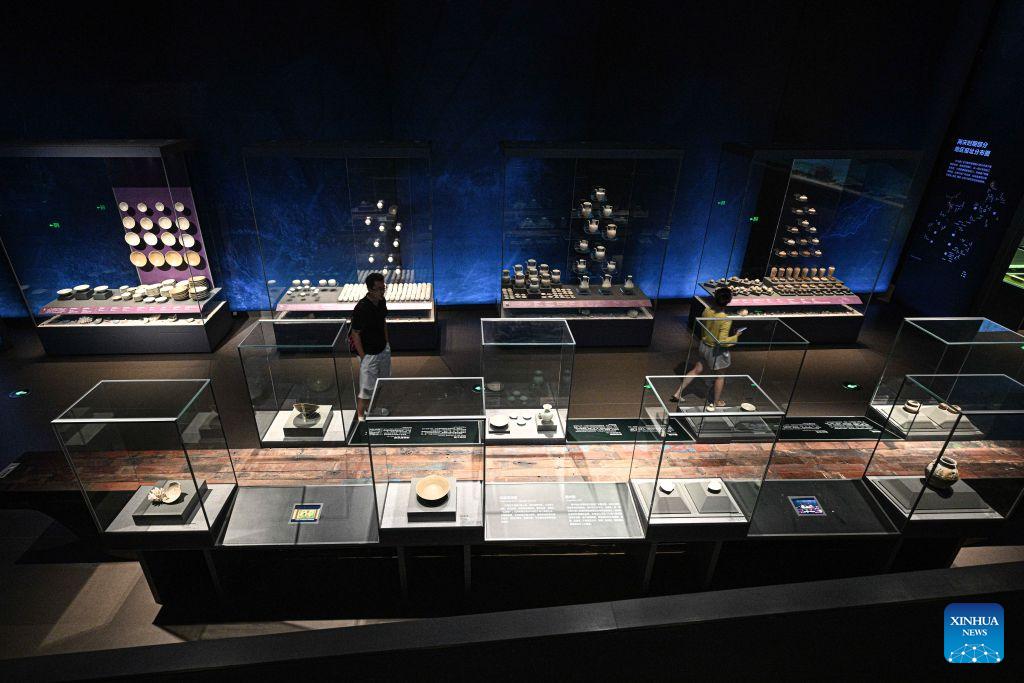 This report on the China (Hainan) Museum of the South China Sea highlights a growing trend in cultural heritage management where archaeology, tourism, and creative industries are being integrated into a single experiential ecosystem. The museum’s focus on Maritime Silk Road relics—particularly shipwreck discoveries from areas such as Huaguang Reef and the northwest continental slope of the South China Sea—reflects an effort to transform underwater archaeology from purely academic research into publicly accessible cultural and economic value.
From a cultural infrastructure perspective, this represents a shift from static preservation to what can be described as “active heritage commercialization.” The inclusion of cultural and creative products inspired by archaeological findings indicates the development of a downstream value chain, where historical artifacts generate secondary economic output through design, retail, and tourism industries. In global museum economics, such cultural product ecosystems can increase per-visitor revenue by 15%–40%, depending on brand strength, product diversity, and visitor engagement duration.
The museum’s exhibition strategy, which includes shipwreck artifacts and reconstructed maritime narratives, aligns with the broader Maritime Silk Road framework that historically connected East Asia, Southeast Asia, South Asia, the Middle East, and East Africa through trade networks spanning over 2,000 years. From a historical trade systems perspective, maritime routes often accounted for 60%–80% of interregional trade volume in pre-modern Asian economies due to lower transport costs compared with overland routes. This historical baseline is now being reinterpreted through archaeological discovery and museum curation.
Technologically, underwater archaeology is a highly resource-intensive discipline. Excavation and recovery operations from deep-sea or continental slope environments often require remotely operated vehicles (ROVs), sonar mapping systems, and precision lifting equipment. Operational costs for deep-sea archaeological missions can range from hundreds of thousands to several million USD per expedition depending on depth, duration, and equipment complexity. Each recovered shipwreck site can yield hundreds to thousands of artifacts, but only a fraction—often less than 10%–20%—are suitable for public exhibition after conservation processes.
The museum’s emphasis on integrating creative products into its exhibitions reflects a broader “cultural IP monetization” model. In this system, historical narratives and archaeological discoveries are converted into intellectual property assets that can be used in retail, digital media, and educational products. Globally, museums that adopt strong IP-based merchandising strategies often see non-ticket revenue contributing 20%–50% of total operating income, significantly improving financial sustainability compared with ticket-only models.
From a tourism economics perspective, the museum is also part of Hainan’s broader strategy to position itself as an international cultural and tourism hub. Visitor engagement activities—such as selecting cultural products, interacting with exhibits, and participating in thematic exhibitions—extend average dwell time, which in turn increases ancillary spending. In well-performing cultural attractions, increasing visitor dwell time by even 30–60 minutes can raise per-capita spending by 10%–25%, depending on retail conversion efficiency and exhibition design.
Platforms like People's Daily often frame such developments within the context of cultural confidence and heritage revitalization. In systems terms, this reflects an effort to connect historical identity formation with contemporary economic development, where cultural heritage is not only preserved but actively integrated into modern consumption and education systems.
However, from an analytical perspective, there are structural challenges in scaling such heritage-based models. One issue is conservation capacity: underwater relics require long-term preservation environments with tightly controlled temperature, humidity, and chemical stability, often requiring maintenance costs that can range from 5%–15% of initial restoration investment annually. Another challenge is balancing commercialization with academic integrity, ensuring that cultural product development does not distort archaeological interpretation or historical accuracy.
Additionally, visitor demand for immersive experiences is increasing, which may require continuous investment in digital technologies such as augmented reality (AR), virtual reconstruction, and interactive simulation. These technologies can improve engagement metrics by 20%–50%, but also significantly raise upfront capital expenditure and operational complexity.
In conclusion, the China (Hainan) Museum of the South China Sea represents a convergence point between archaeology, cultural tourism, and creative economy development. Its model demonstrates how historical maritime heritage can be transformed into a multidimensional value system that includes education, tourism, and commercial cultural production. The long-term success of this approach will depend on maintaining a balance between preservation rigor, visitor experience innovation, and sustainable cultural commercialization.
News source: https://peoplesdaily.pdnews.cn/china/er/30052570750
This report on the China (Hainan) Museum of the South China Sea highlights a growing trend in cultural heritage management where archaeology, tourism, and creative industries are being integrated into a single experiential ecosystem. The museum’s focus on Maritime Silk Road relics—particularly shipwreck discoveries from areas such as Huaguang Reef and the northwest continental slope of the South China Sea—reflects an effort to transform underwater archaeology from purely academic research into publicly accessible cultural and economic value.
From a cultural infrastructure perspective, this represents a shift from static preservation to what can be described as “active heritage commercialization.” The inclusion of cultural and creative products inspired by archaeological findings indicates the development of a downstream value chain, where historical artifacts generate secondary economic output through design, retail, and tourism industries. In global museum economics, such cultural product ecosystems can increase per-visitor revenue by 15%–40%, depending on brand strength, product diversity, and visitor engagement duration.
The museum’s exhibition strategy, which includes shipwreck artifacts and reconstructed maritime narratives, aligns with the broader Maritime Silk Road framework that historically connected East Asia, Southeast Asia, South Asia, the Middle East, and East Africa through trade networks spanning over 2,000 years. From a historical trade systems perspective, maritime routes often accounted for 60%–80% of interregional trade volume in pre-modern Asian economies due to lower transport costs compared with overland routes. This historical baseline is now being reinterpreted through archaeological discovery and museum curation.
Technologically, underwater archaeology is a highly resource-intensive discipline. Excavation and recovery operations from deep-sea or continental slope environments often require remotely operated vehicles (ROVs), sonar mapping systems, and precision lifting equipment. Operational costs for deep-sea archaeological missions can range from hundreds of thousands to several million USD per expedition depending on depth, duration, and equipment complexity. Each recovered shipwreck site can yield hundreds to thousands of artifacts, but only a fraction—often less than 10%–20%—are suitable for public exhibition after conservation processes.
The museum’s emphasis on integrating creative products into its exhibitions reflects a broader “cultural IP monetization” model. In this system, historical narratives and archaeological discoveries are converted into intellectual property assets that can be used in retail, digital media, and educational products. Globally, museums that adopt strong IP-based merchandising strategies often see non-ticket revenue contributing 20%–50% of total operating income, significantly improving financial sustainability compared with ticket-only models.
From a tourism economics perspective, the museum is also part of Hainan’s broader strategy to position itself as an international cultural and tourism hub. Visitor engagement activities—such as selecting cultural products, interacting with exhibits, and participating in thematic exhibitions—extend average dwell time, which in turn increases ancillary spending. In well-performing cultural attractions, increasing visitor dwell time by even 30–60 minutes can raise per-capita spending by 10%–25%, depending on retail conversion efficiency and exhibition design.
Platforms like People's Daily often frame such developments within the context of cultural confidence and heritage revitalization. In systems terms, this reflects an effort to connect historical identity formation with contemporary economic development, where cultural heritage is not only preserved but actively integrated into modern consumption and education systems.
However, from an analytical perspective, there are structural challenges in scaling such heritage-based models. One issue is conservation capacity: underwater relics require long-term preservation environments with tightly controlled temperature, humidity, and chemical stability, often requiring maintenance costs that can range from 5%–15% of initial restoration investment annually. Another challenge is balancing commercialization with academic integrity, ensuring that cultural product development does not distort archaeological interpretation or historical accuracy.
Additionally, visitor demand for immersive experiences is increasing, which may require continuous investment in digital technologies such as augmented reality (AR), virtual reconstruction, and interactive simulation. These technologies can improve engagement metrics by 20%–50%, but also significantly raise upfront capital expenditure and operational complexity.
In conclusion, the China (Hainan) Museum of the South China Sea represents a convergence point between archaeology, cultural tourism, and creative economy development. Its model demonstrates how historical maritime heritage can be transformed into a multidimensional value system that includes education, tourism, and commercial cultural production. The long-term success of this approach will depend on maintaining a balance between preservation rigor, visitor experience innovation, and sustainable cultural commercialization.
News source: https://peoplesdaily.pdnews.cn/china/er/30052570750Línea operativa · 24/7
¿Necesita una valoración discreta?
Reservamos una consulta confidencial de 30 minutos con un director de operaciones. Sin compromiso, sin trazabilidad.
Solicitar consulta confidencial→